

Generative engine optimization
Get named by the machines that answer.
When someone asks an AI who does this in Tampa, you are either cited by name or left out of the answer entirely. Cited is the goal.
Enginecy is a Tampa, Florida agency and product studio that brings search, brand, web, and automation into one senior team, and we build this discipline for clients the way we practice it ourselves.
Book the free audit01 / The definition
What GEO means.
Generative engine optimization is the practice of structuring a business's information so AI systems can find it, trust it, and repeat it by name. It replaces guessing at ten blue links with making sure the one answer an AI gives out loud contains your business, not a competitor's.
- 01
Diagnose
We query the systems your buyers actually use, map every place your business is missing, flag outdated facts already being cited, and benchmark against whoever is getting named instead.
- 02
Findability
Schema, entity definition, and the structured facts that let a model understand what you do and who you serve without guessing.
- 03
Evidence
The citable proof an answer engine needs before it will repeat a claim: specifics, sources, and consistency across every place you appear.
- 04
Measurement
Monthly reporting against a visibility milestone, showing where you are named now and where you were not before.
02 / The relationship
Does GEO replace SEO?
No. It runs on top of it, and businesses that treat the two as separate end up sending AI systems conflicting signals about who they are.
Traditional SEO still decides whether your site can be crawled, indexed and trusted in the first place. GEO does not skip that step, it builds on it. What changes is the destination. SEO optimizes for a list of ten links a person scans. GEO optimizes for the single answer an assistant assembles from everything it can find about you, often without a click at all.
We run both from one technical foundation, so the site that ranks is the site that gets cited.
In the answer
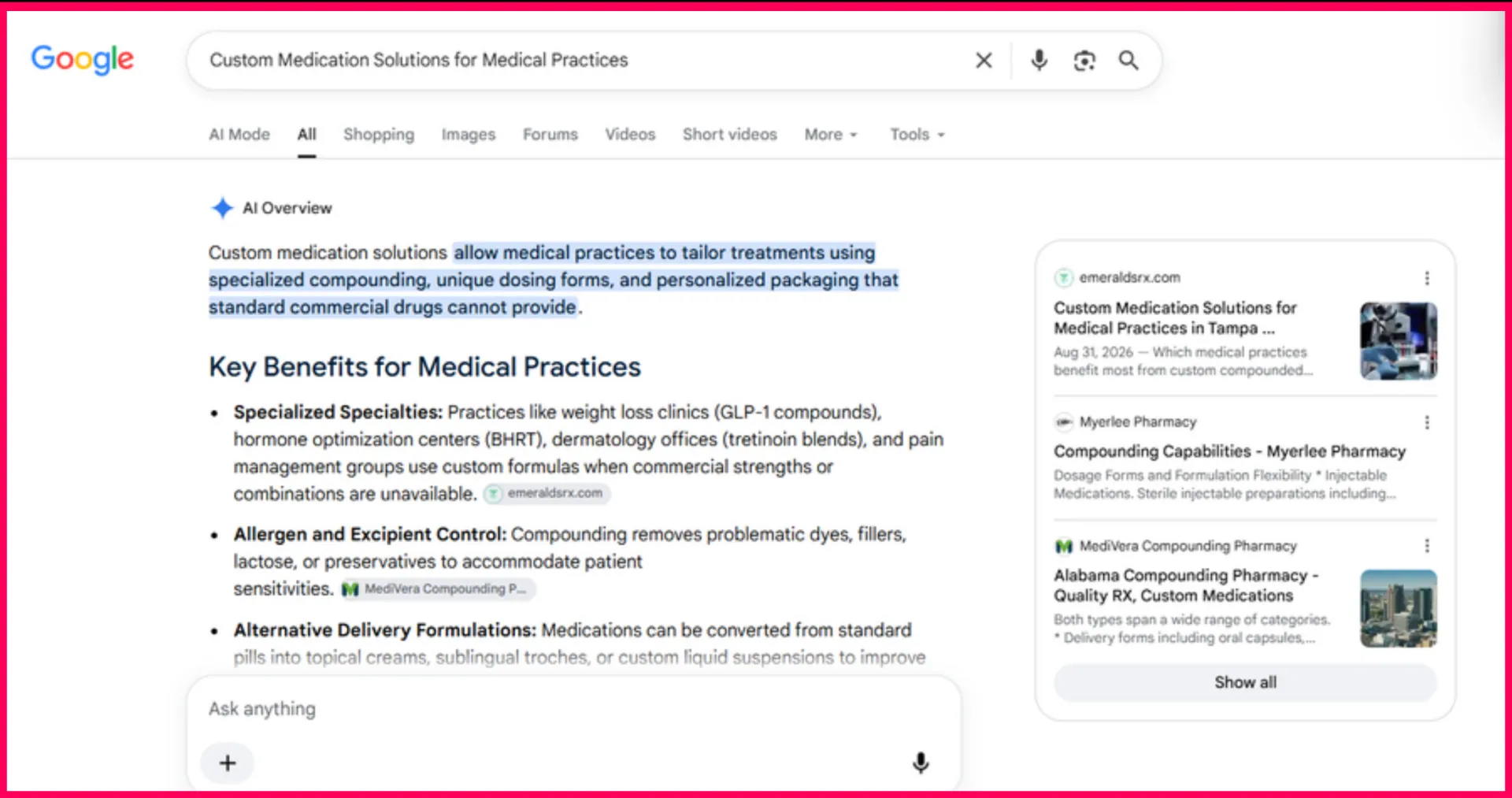
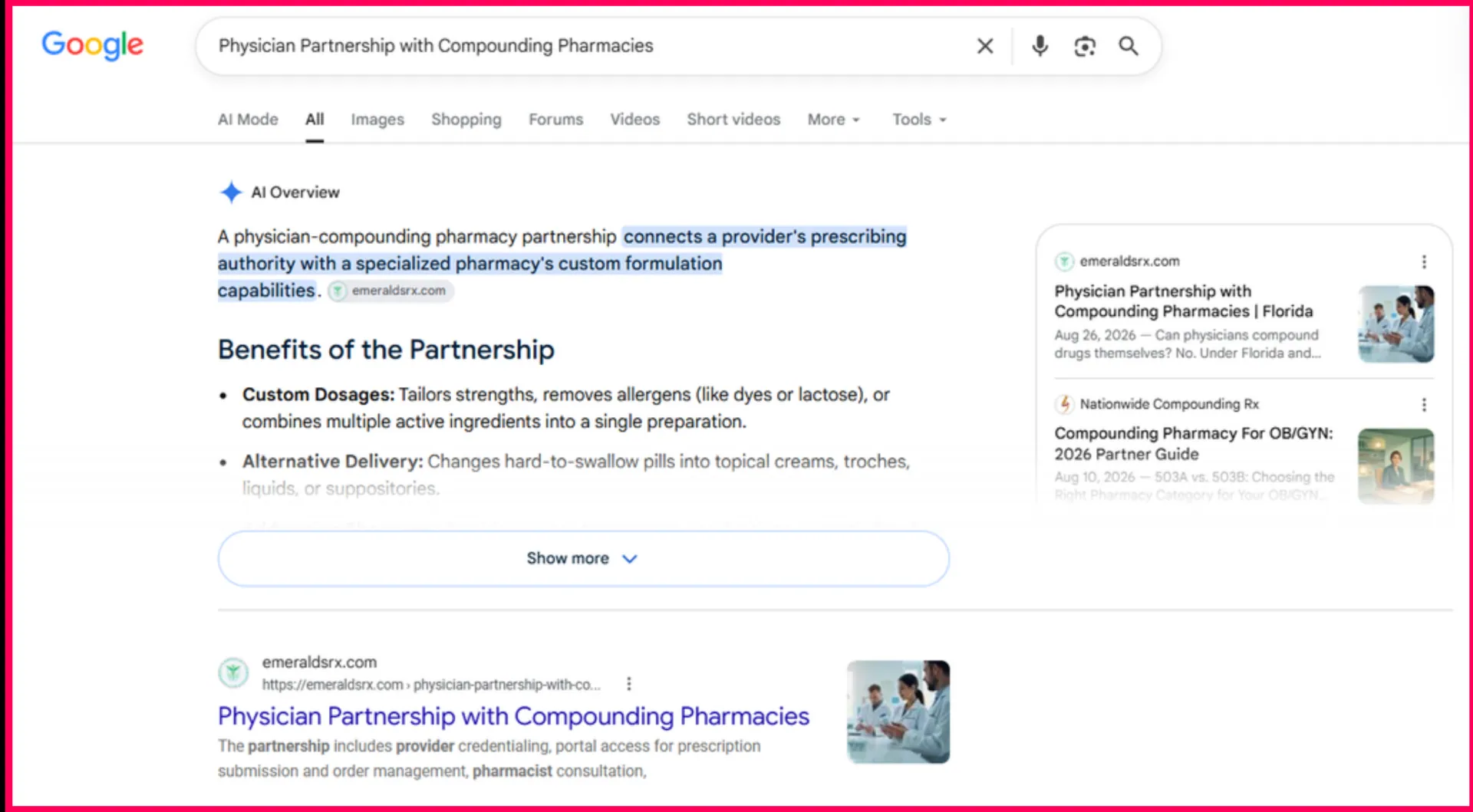
AI systems cite. They do not rank. The goal is being named, not being first.
03 / The evidence
Why this matters now.
Structure changes citation rate
The paper that named the practice found that adding citations, statistics and quotations to a page improved its visibility inside AI answers by up to 40% in benchmark testing.
Aggarwal et al., Generative Engine Optimization, Princeton, Georgia Tech and the Allen Institute for AI, November 2023Vague pages are the ones left out
The same study's error analysis found that sources with unstructured, non-specific claims were the ones most often skipped, against sources carrying explicit facts, numbers and quotes.
Aggarwal et al., November 2023Search volume is moving
Gartner projected traditional search engine volume would fall 25% by 2026 as people move queries to assistants and chat interfaces.
Gartner, The Future of Search, February 2024Most searches already end without a click
Close to 60% of Google searches end with no click on any result, a share that grew as answer-style results took over the top of the page.
SparkToro and Datos, Zero-Click Search Study, 2024AI Overviews are mainstream
Google launched AI Overviews in US results in May 2024 and expanded them past 100 countries, with Alphabet leadership describing a reach of 2.5 billion monthly users.
Google I/O 2024 and Alphabet earnings calls, 2024 to 2025Assistants are a first stop, not a novelty
OpenAI has stated publicly that ChatGPT's weekly active user base runs into the hundreds of millions, which makes it a starting point for the research and recommendation questions that used to begin on Google.
OpenAI public statements, 202504 / Proof
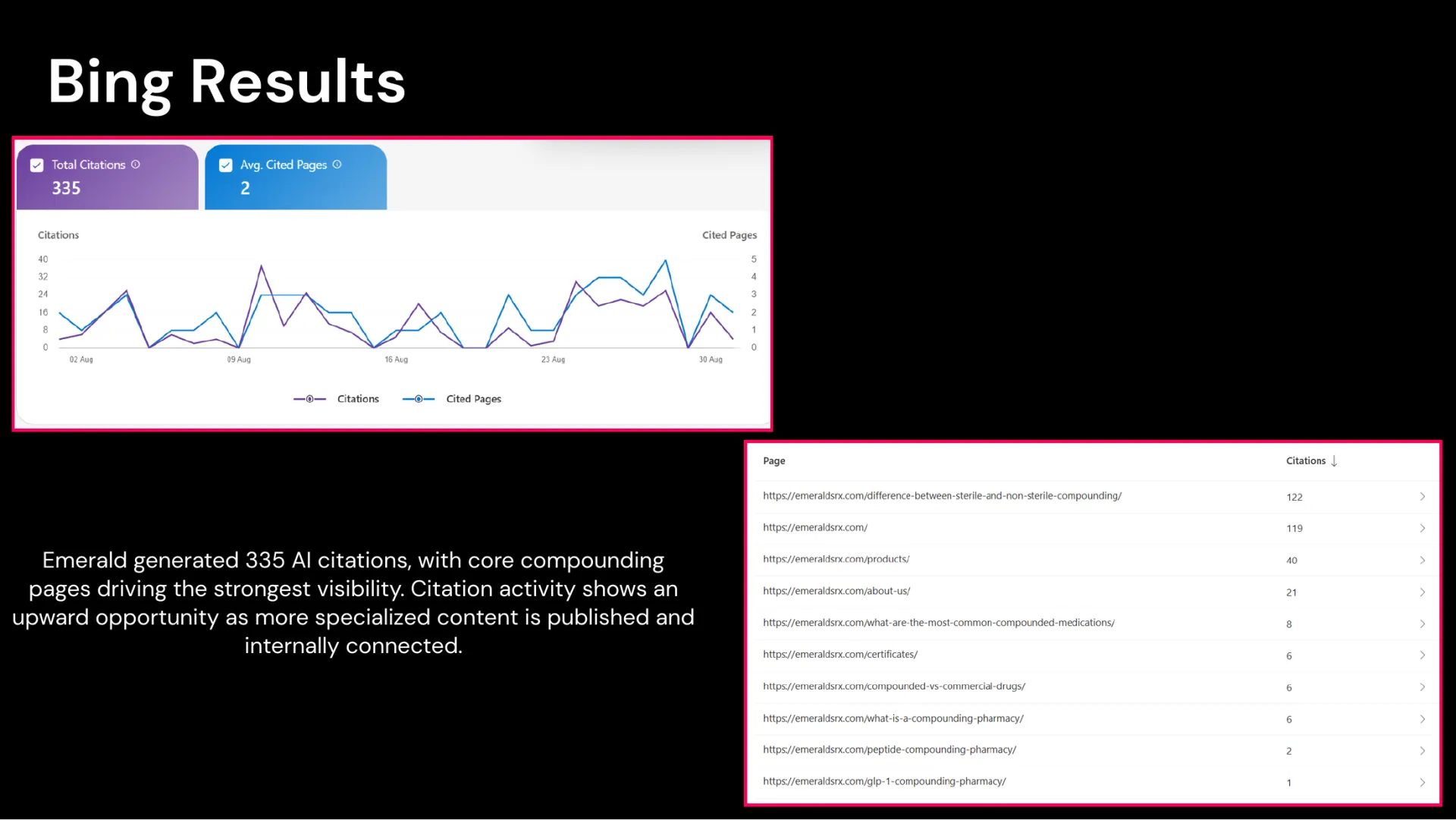
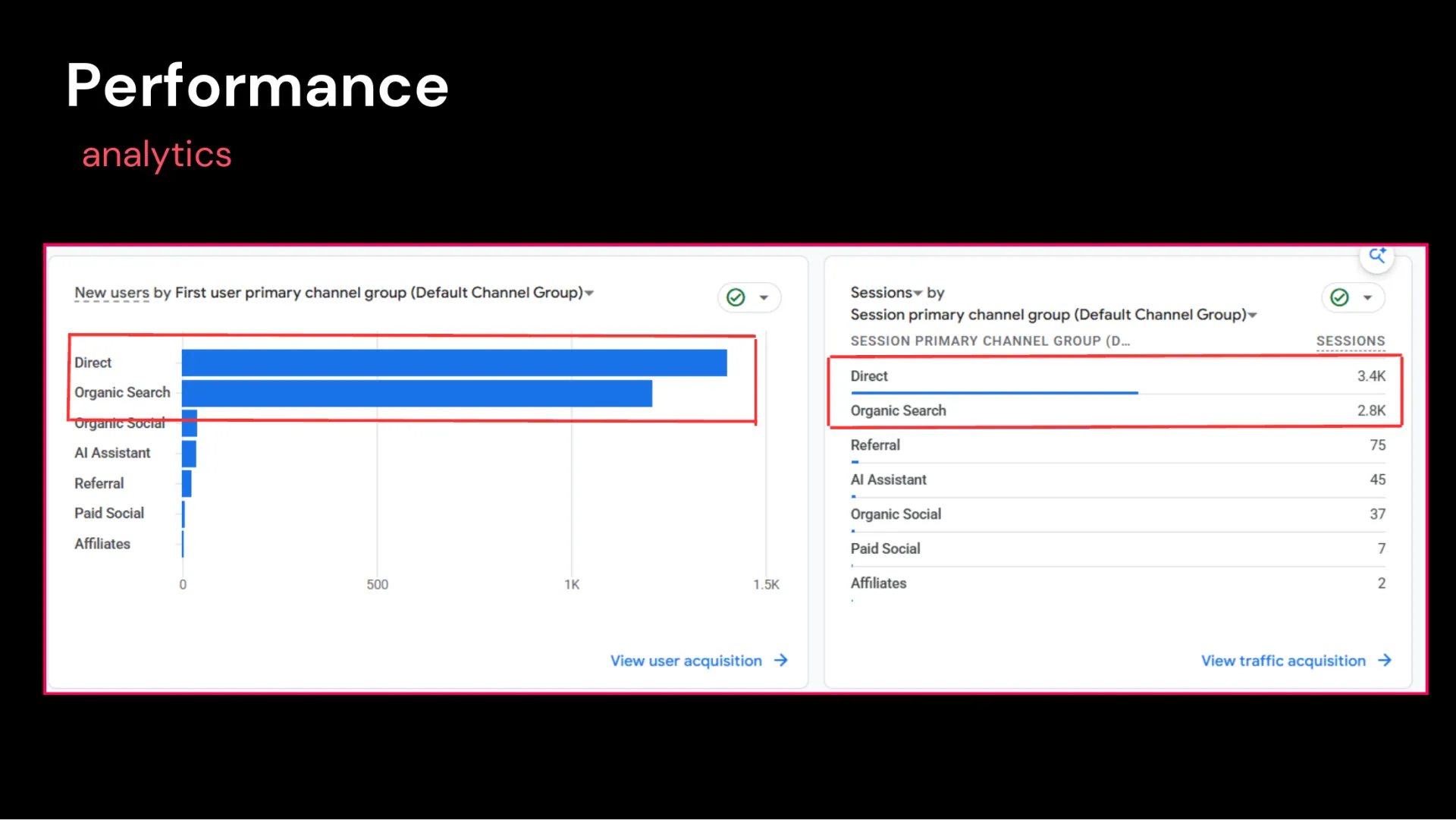
A citation, not a promise.
What we build
The work that gets you repeated.
Entity and schema foundation
Structured data, consistent business facts, and the technical groundwork that makes your information machine-readable.
Answer-shaped content
Content written to answer the questions buyers actually ask an AI, in a form a model can quote without reshaping it.
Visibility reporting
Ongoing checks across the AI systems your market uses, reported monthly against a visibility milestone rather than a ranking position.
05 / The method
How it actually gets built.
- 01
Diagnose
We put the questions your buyers actually ask to the systems they actually use, and record what comes back today: who gets named, what the models believe about you, and which competitor is being cited in your place.
- 02
Fix the foundation
Schema on every service and location page, one consistent set of business facts, a crawlable architecture with nothing hidden behind JavaScript, and entity signals that agree with each other everywhere they appear.
- 03
Write the answer
Pages built to be the answer rather than to rank near it: direct statements a model can lift whole, specifics instead of adjectives, and the depth that earns a citation.
- 04
Agree off your domain
Reviews, directories, profiles and mentions carry the same facts as your site, because a knowledge graph that contradicts itself gets skipped.
- 05
Measure monthly
A monthly check across the systems your market uses, reported as where you are named now against where you were not before. No ranking promises, because AI systems cite rather than rank.
06 / Questions
What people ask about GEO.
Is GEO different from SEO?
It builds on SEO rather than replacing it. Search engines still need to crawl, index and trust the site. GEO adds the structure, evidence and off-domain agreement an AI system needs before it will repeat your name in an answer.
Can you guarantee my business appears in AI answers?
No, and nobody can. What we control is whether your information is findable, structured, consistent and worth citing. We report each month on where you are named and where you are still missing.
How long does it take?
AI systems refresh what they know on their own schedule. We look for movement across a quarter and report monthly, starting from a recorded baseline of what the systems say about you today.
Which systems do you check?
Google AI Overviews, ChatGPT, Perplexity and Bing Copilot as standard, plus any assistant your buyers tell us they use.
Do we need new content for this?
Usually some. The questions people ask an assistant are rarely the pages a site already has, and an answer engine cites the page that addresses the question directly.
Perspectives