
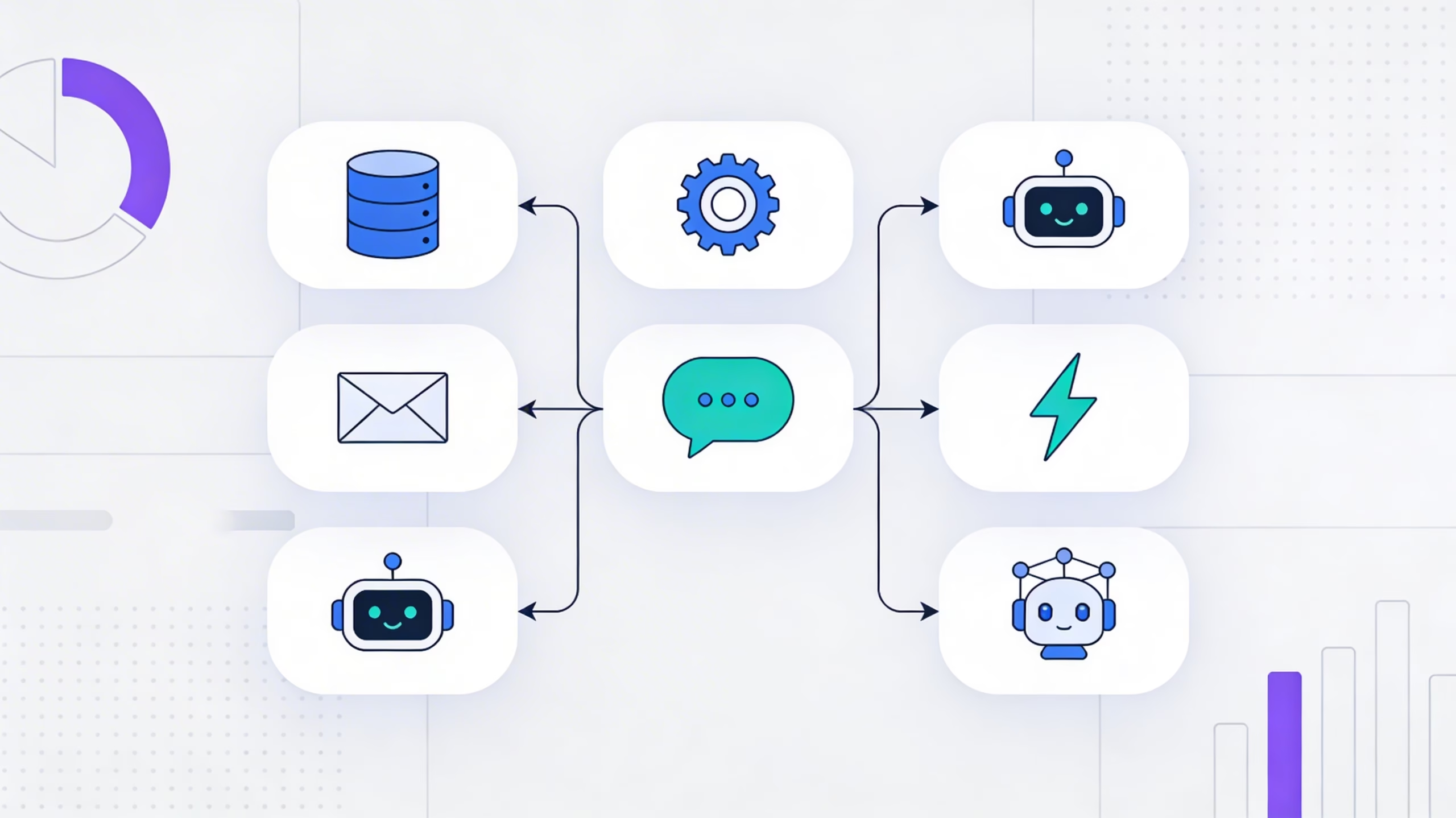
The Future of AI Automation
Artificial intelligence is rapidly changing how businesses operate, from customer support to internal workflows.
Well-designed automation can reduce manual effort, minimize errors, and unlock new capabilities for teams of any size.
Why Automation Matters
Modern companies rely on a growing number of tools, platforms, and data sources.
Without automation, teams waste time on repetitive tasks that add little strategic value.
- Faster execution of routine processes
- Better consistency and fewer human errors
- Clearer audit trails and accountability
- More time for creative and high-level work
Automation is not about replacing people; it is about amplifying what they can do.
Key Components of an AI Automation Stack
A robust automation stack usually includes:
- Data sources (CRMs, spreadsheets, databases)
- Orchestration tools (workflow engines, no-code builders)
- AI models (LLMs for reasoning, extraction, and generation)
- Integration layers (APIs, webhooks, queues)
bash
# Example of a simple automation step curl -X POST https://api.example.com/tasks \ -H "Content-Type: application/json" \ -d '{"title": "Follow up with client", "due_in_days": 2}'
Common Use Cases
- Automated email or chat replies for FAQs
- Lead qualification based on form submissions
- Report generation from raw operational data
- Data enrichment and cleanup for CRMs
Example Task List
- Identify repetitive tasks in your workflow
- Map each task to a clear input and output
- Choose tools that integrate with your existing stack
- Iterate, measure impact, and refine
Conclusion
AI automation is no longer a luxury; it is becoming a basic requirement for staying competitive.
Teams that adopt automation thoughtfully can move faster, experiment more, and deliver better experiences for their customers.